The ACTS prayer acronym is the best tool for new believers learning to pray. It’s also great for disciples of Jesus who are struggling in their prayer life or those who are praying but lack focus.
When you come to Jesus Christ in prayer, do you bring a long list of wants, treating your prayer time as a mere opportunity to ask for things? Or do you come with a clean heart in worship, humbly acknowledging the Father’s greatness?
Do you come pouring your soul out, confessing your sins, and thanking Him for all He has done, will do, and can do? Or do you come complaining about what is going wrong in your life and being ungrateful for all Christ has done? Are you full of supplication, coming to Christ unassuming and ready to submit yourself to the will of God?
Do you know how to come to Christ Jesus humbly and reverently? If not you’re in the right place!

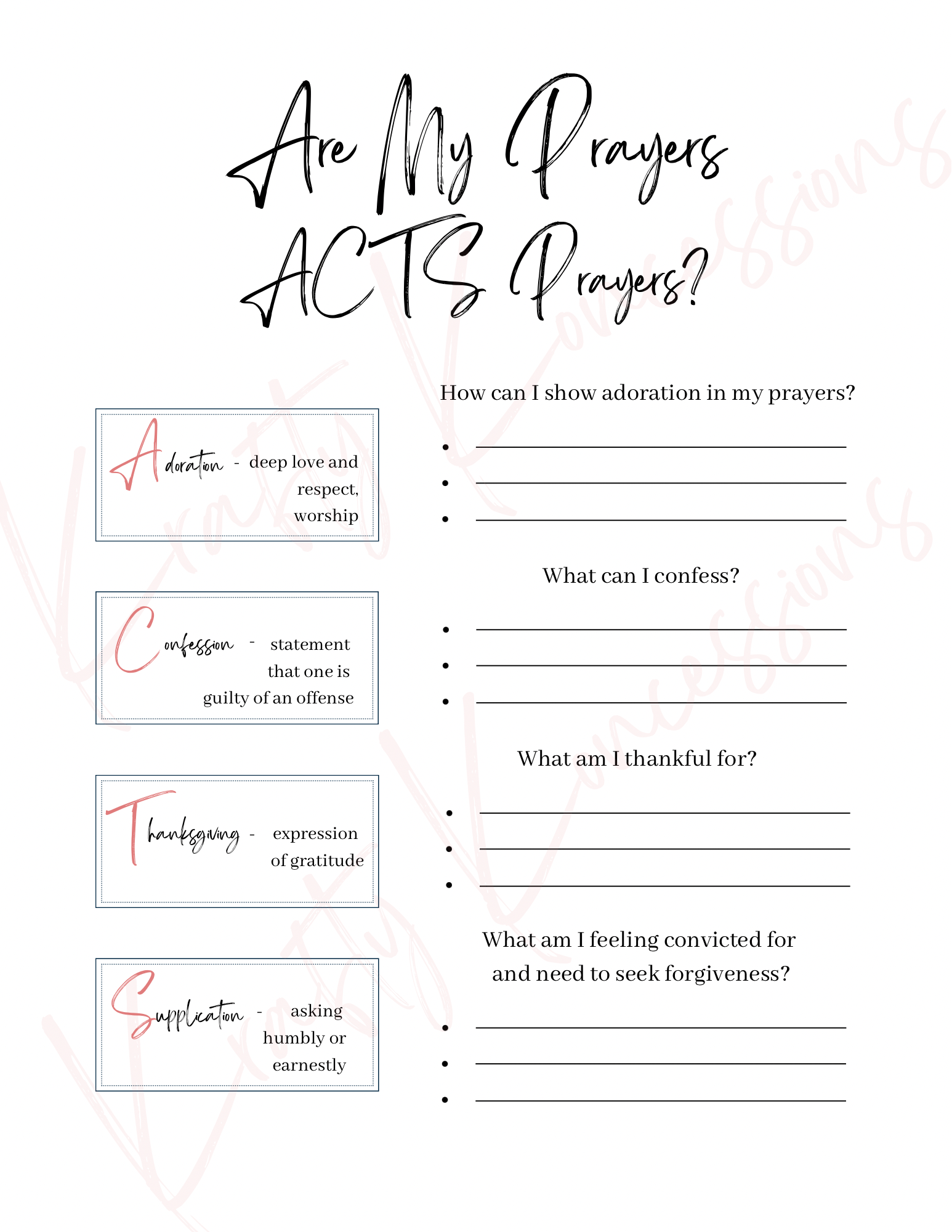
Don’t be overwhelmed thinking prayer is too hard. That’s why the acronym A.C.T.S. exists. It’s a great way to remember how we are to approach the throne of grace. When you begin to pray just remember the ACTS prayer acronym simply stands for adoration, confession, thanksgiving, and supplication. When using the acronym ACTS in your daily prayer life you are honoring your Heavenly Father, coming into the presence of God with reverence.
Using the Acts prayer acronym ensures that you come to God first by love and devotion for who He is. We then can confess, thank Him, and ask for needs to be met. I’m sure there are different prayer models available, but the ACTS method is a simple way to address prayer requests and the needs of others without missing anything important.
The ACTS prayer model may not be presented as the ACTS prayer method directly in the Bible; however, there are definite scriptures located in the Bible that instruct us to do just as the ACTS model suggests. This easy acronym teaches us that the elements of prayer, as found in the Lord’s Prayer—adore Christ, confess our sins, thank Him, and supplicate before Him—demonstrate our acknowledgment of God’s attributes.

In Matthew 6:9-13 we find the Lord’s prayer where Jesus shows us how to pray. He displays the perfect usage of ACTS in this method of prayer to the disciples when they ask Him how they should pray.
As mentioned before, the ACTS acronym stands for adoration, confession, thanksgiving, and supplication. Perhaps the best way to discuss these is to define them. If you’d like to go deeper into your Bible study on ACTS prayer method try our Verse Mapping Sheet to
Adoration – to worship, show deep love, respect
Confession – to state that one is guilty of an offense
Thanksgiving – to express gratitude
Supplication – to ask humbly or earnestly
The most important thing about the A.C.T.S acronym is that it makes the steadfast love of Christ the center point of the A.C.T.S prayer method. Our own sins and transgressions are only mentioned in the confession of sin because we must seek God’s forgiveness. The purpose is to come into God’s presence in prayer and show our reverence for how awesome God is.
Indeed, there are different types of prayer methods available to help you pray or to help you teach others, but the ACTS method takes only a couple of minutes to learn. A disciple is, therefore, ready to go to battle in prayer for the rest of their life.
If you’re waiting for the Father to move in your life, remember He’s waiting for you, too. He wants us to envelop ourselves in the truth and armor of His Word and unburden our hearts and souls in prayer. A great place to start is with “Adoration” the part of the prayer where we worship our God and His holiness while showing our deep love and reverence for Him.
The next post in the ACTS Prayer Acronym series will focus on adoration. We will examine specific Bible verses and examine the good gifts Christ has for us in the New Testament. In the meantime, check out “The Difference Between Spiritual Gifts and Talents” post